Cargo platform
Support grain, metals, containers, reefer and project cargo through defined operating cases.
ARS / PROJECT PROFILE
A dedicated multipurpose vessel, operating company and cargo network developed as one accountable platform.
THE PROJECT
ARS is structured as a logistics platform with dedicated marine capacity. Its value depends on three connected elements: a technically credible asset, an operating company able to manage voyages and compliance, and a cargo network that supports complete round voyages.
The same baseline connects design decisions, route access, cargo capacity and the operating case.
Support grain, metals, containers, reefer and project cargo through defined operating cases.
Use a purpose-developed asset to improve access, availability and schedule control across constrained waterways.
Pair outbound cargo with credible backhaul across the complete operating cycle.
Connect commercial management, voyage execution, technical management, ports and compliance in one accountable platform.
TARGET CONFIGURATION
Principal dimensions, cargo capacity and propulsion basis used for the current design and operating model.
CURRENT PROJECT BASIS · PRELIMINARY AND NON-CONTRACTUAL
Deadweight at the three reference drafts in the current ARS configuration.
| Operating point | Draft | Deadweight |
|---|---|---|
| Minimum river profile | 3.00 m | 4,500 t DWT |
| Design river profile | 3.60 m | 5,850 t DWT |
| Maximum sea profile | 4.15 m | 7,300 t DWT |
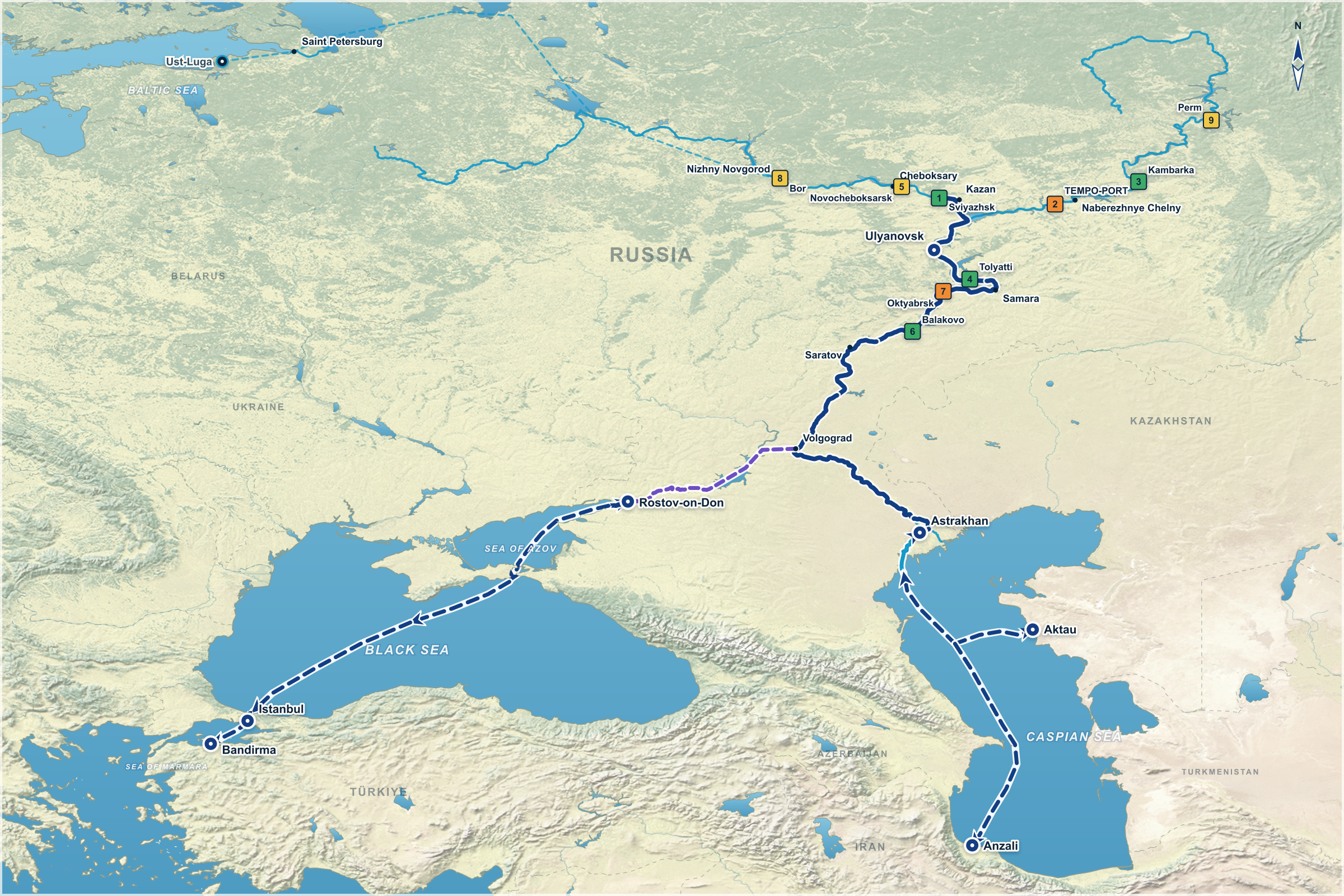
ARS ROUTE NETWORK
The Volga and Kama network links inland terminals with the Caspian, Azov, Black Sea and Marmara corridors.
PARTICIPATION PATHS
Select the role closest to your interest. Each route starts with a focused brief so the first discussion can address the relevant technical, operating or commercial questions.
Explore the vessel, operating and cargo programme as one investment case, with the project basis and open workstreams kept visible.
Useful first input: investment horizon, participation range and governance requirements.
Request a capital briefing↗Test crewing, voyage execution, technical management, compliance and port interfaces against the target vessel and route network.
Useful first input: operating footprint, fleet experience and proposed management scope.
Discuss an operating role↗Connect cargo profile, volumes, seasonality, loading points and backhaul opportunities to the vessel's operating envelope.
Useful first input: cargo, annual or seasonal volume, origin, destination and loading window.
Discuss a cargo case↗Present relevant design, construction, equipment or specialist capability against a controlled technical requirement and delivery path.
Useful first input: capability, available capacity, location, schedule and reference projects.
Present technical capability↗PROJECT DIALOGUE
ARS remains under development. Dimensions, capacities, performance values, routes and commercial scenarios shown on this page are preliminary and non-contractual.